

| Period | March 10, 2026 (Tue) - March 31, 2027 (Wed) |
|---|---|
| Venue | Mezzanine Floor, The Gallery of Horyuji Treasures, Tokyo National Museum |
| Opening Hours | 9:30 am–5:00 pm Closed on Mondays (Excluding holidays. On those days, the Museum will be open on Monday and closed the following day) *Open until 8:00 p.m. on Fridays and Saturdays. |
| Admission | Tokyo National Museum Regular exhibitions, including the Gallery of Horyuji Treasures, ¥1,000 (adults), ¥500 (university students); free with ID for persons under 18 and over 70. - Persons with disabilities are admitted free of charge along with one attendant. Please show an ID or other documentation upon entry. - Special exhibitions at the Tokyo National Museum require a separate ticket, which also allows entry to regular exhibitions, including the Gallery of Horyuji Treasures, on same day without reservation. |
| Organizers | Tokyo National Museum, National Center for the Promotion of Cultural Properties (CPCP) |
| With the Support of | Hōryūji Temple |
| Multilingual Websites | |
| Website | |
| YouTube | |
| Pamphlet of The Digital Gallery of Horyuji Treasures |
The Digital Gallery of Horyuji Treasures
Reopens 10 March 2026 with New Interactive Experiences
Discover the treasures in new ways
Nestled among trees on the western edge of TNM’s grounds, the Gallery of Horyuji Treasures houses sacred Buddhist works of art. Many are over a thousand years old and are too fragile to be placed on permanent display. To remedy this, an interactive exhibition space called the Digital Gallery of Horyuji Treasures was installed on the gallery’s mezzanine floor in January 2023. The digital gallery helps visitors more fully understand the collection through unique digital displays and theoretical reconstructions of how treasures originally looked. Since its inception, the digital gallery has been innovating new ways to appreciate the Horyuji Treasures, using interactive content and replicas to bring history to life.
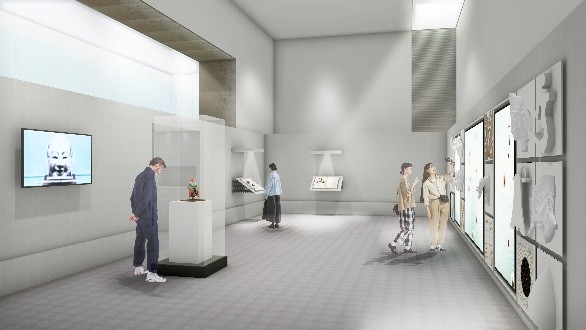
Conceptual Rendering of Visitors Interacting with New Exhibits (Left: Digital Book; Right: Digital Wall)
In March, the gallery will feature two new digital exhibits that offer the most interactive experiences yet to explore the highlights of the Horyuji Treasures in the TNM collection. The new exhibits are equipped with intuitive interfaces that respond to visitors’ gestures, ensuring even those with limited knowledge of Japanese art and the Horyuji Treasures can enjoy them. Designed with inclusivity in mind, the exhibits are accessible to people of all abilities, including wheelchair users and children. Digital content is available in English, Japanese, Chinese, and Korean.
Planning & Supervision: Tokyo National Museum, Center for the Promotion of Cultural Properties
Digital Content Creation: Sabia Inc.
Highlights of the Exhibition
The digital wall is an immersive touch-panel experience using massive 86-inch monitors. Tap one of the floating orbs to select a masterpiece and examine it in detail by rotating and zooming in on HD images. Hidden episodes, quizzes, and other activities enhance the experience beyond simply viewing images.
Reliefs adorn the spaces between the monitors. 3D and UV printing were used to create touchable displays of close-up views of treasures’ designs. The printed models let visitors use their sense of touch to better appreciate the striking designs and forms found in these historic works of art. The digital wall intentionally incorporates sight, sound, and touch to offer a multisensory experience of the Horyuji Treasures.
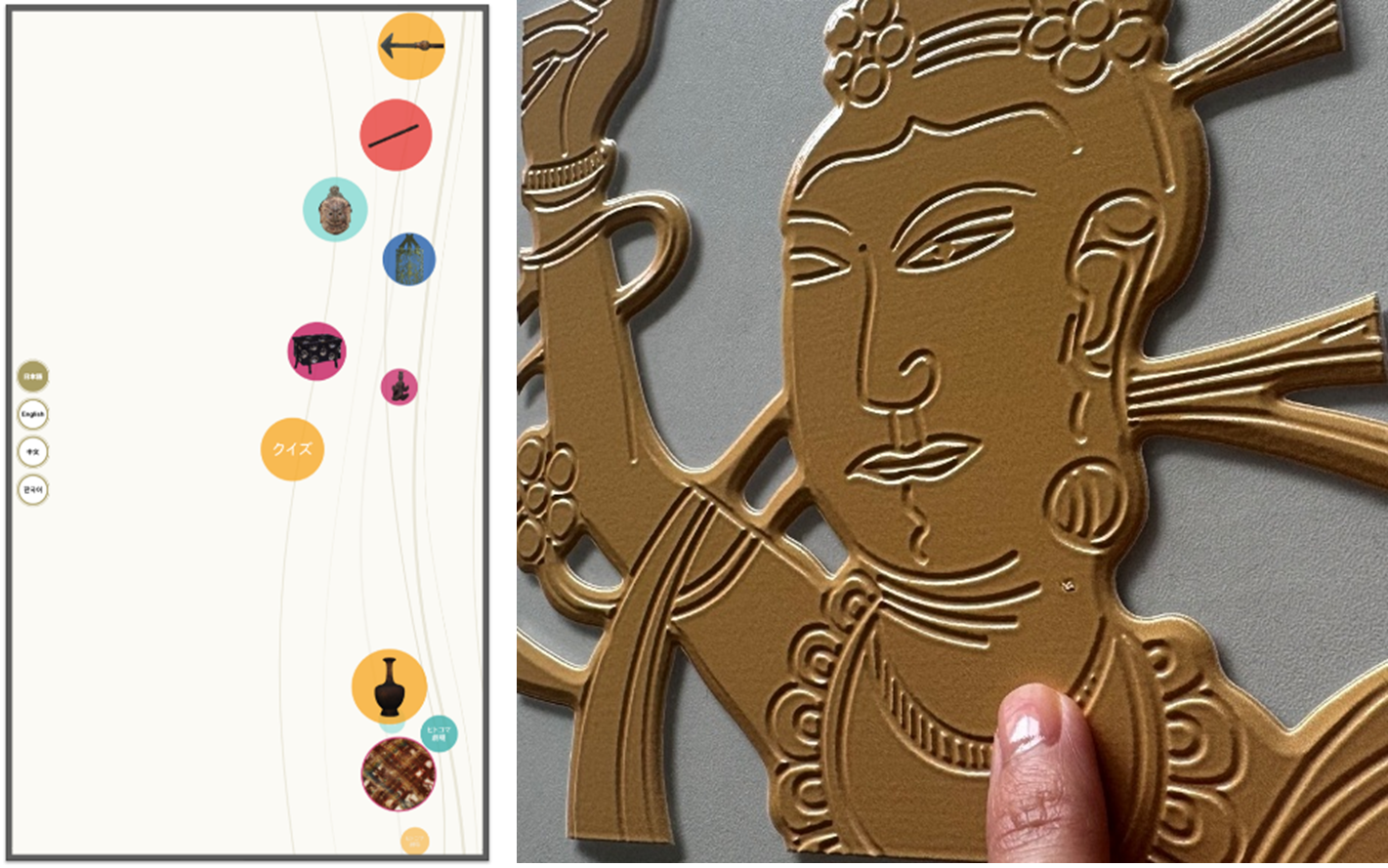
From left to right: Home Screen of the Digital Wall , and Tactile wall reliefs: Try to guess which treasures these reliefs are based on while running your fingers along the contours and patterns.
The Collection of Horyuji Treasures consists of over 300 works originally belonging to Horyuji Temple in Nara. The temple presented the collection to the imperial household in 1878, and the works were placed under government ownership in the postwar period. The collection is currently housed and exhibited in the Gallery of Horyuji Treasures at the Tokyo National Museum. The digital wall presents 3D models and HD images of some 140 sculptures, ritual tools, decorative arts, and other objects in the Horyuji Treasures on immersive 86-inch monitors. Visitors can zoom in and rotate images to explore works at their leisure, examining details that would be impossible to see on the artifacts in person.
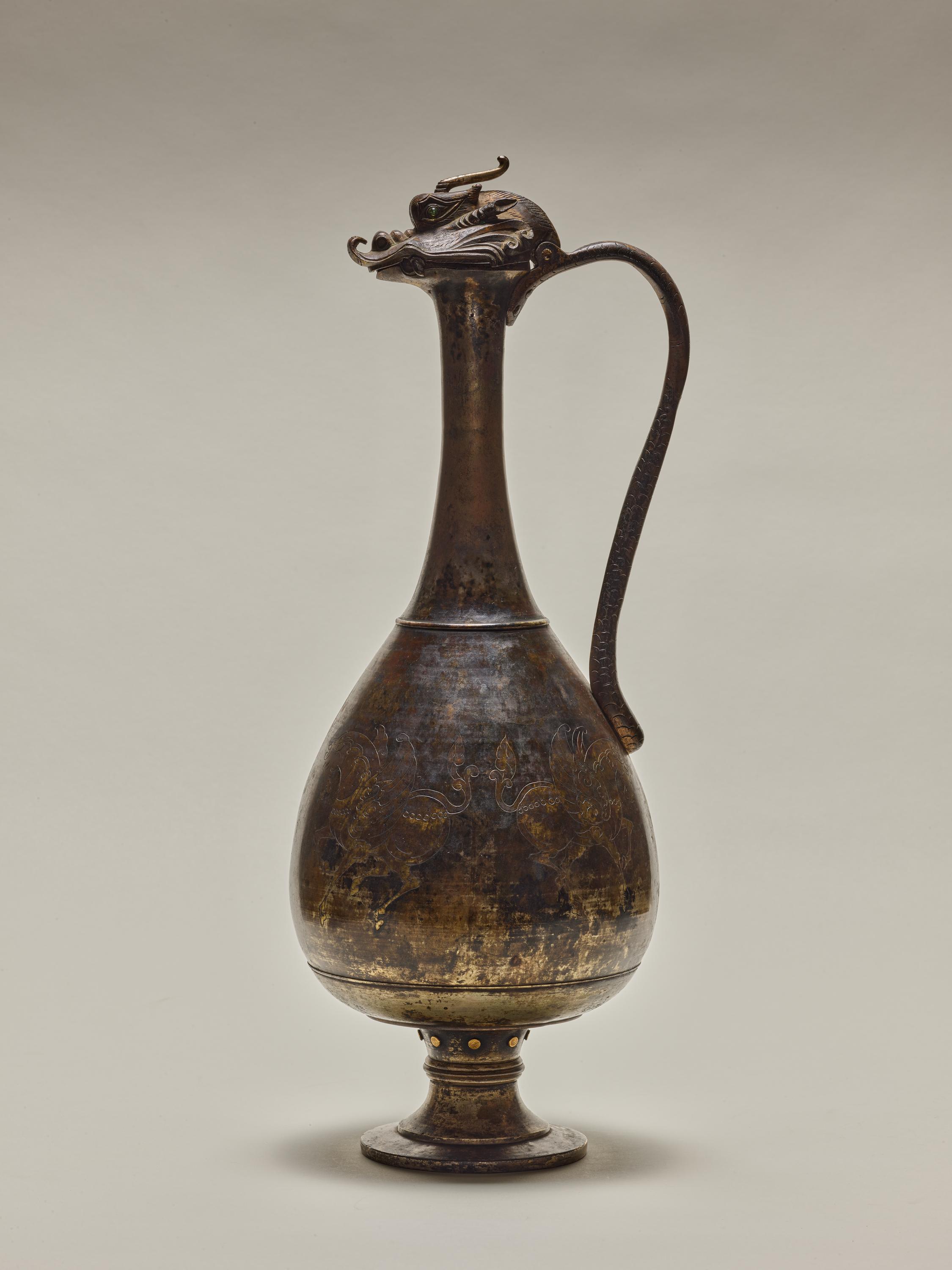
Dragon-Head Pitcher (National Treasure). Tokyo National Museum
The exhibit “Flip through the Illustrated Catalogue of Treasures” marks TNM’s first foray into digital books. Virtually no digital books have been introduced in Japanese museums. As such, this groundbreaking exhibit proposes a new way to engage with cultural heritage in museum settings.
The book is based on Illustrated Catalogue of Treasures, a historical text documenting an exhibition held in Edo (now Tokyo) in 1842 of treasures brought from Horyuji Temple in Nara. Using real paper pages, the book superimposes 3D models and images of the Horyuji Treasures in TNM’s collection over the original text’s some 180-year-old illustrations.
This intuitive viewing experience features animations and sounds that play automatically in response to visitor actions, like turning pages and touching images.
The digital book transcends the limits of a physical gallery experience, taking visitors on a journey through time as they make and share new discoveries while comparing renderings of the gallery’s treasures in the 1800s with how they look today.
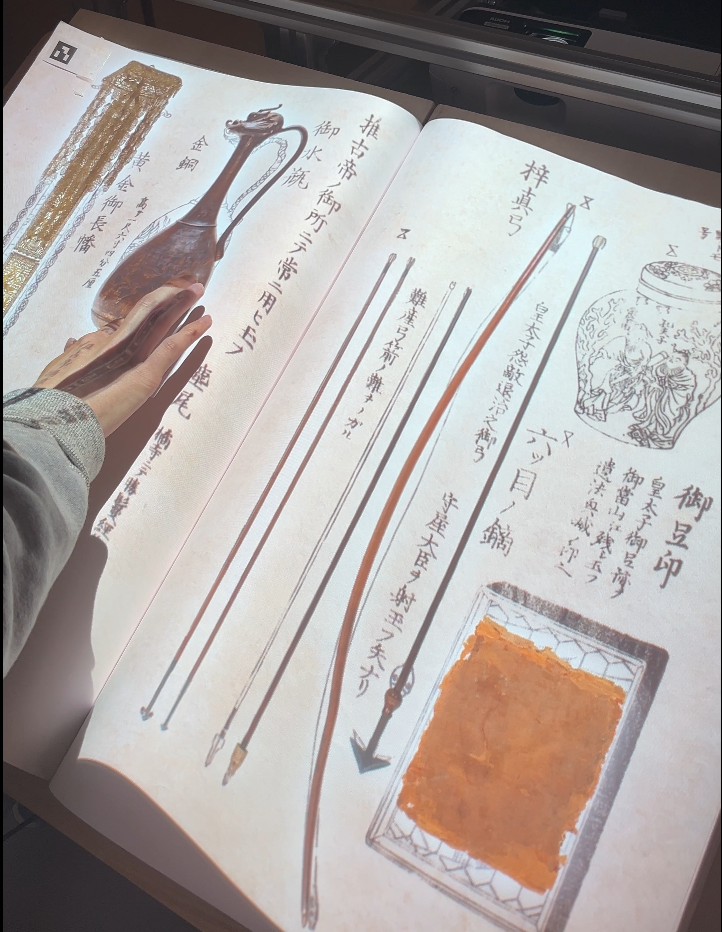
Interacitve Digital Book Display: Flip through the Illustrated Catalogue of Treasures
The Illustrated Catalogue of Treasures and Supplement to the Illustrated Catalogue of Treasures are part of Catalogue of Temple Statues and Sacred Treasures, a text similar to a modern exhibition catalogue. The publication contains images and object descriptions to document treasures from Horyuji Temple exhibited in Edo (now Tokyo) in 1842. The main catalogue and its supplement describe over 85 temple treasures with illustrations by the ukiyo-e artist Utagawa Kuninao (1795–1854).
Of the treasures listed, 79 are currently in the TNM’s collection and can be explored in the digital book.
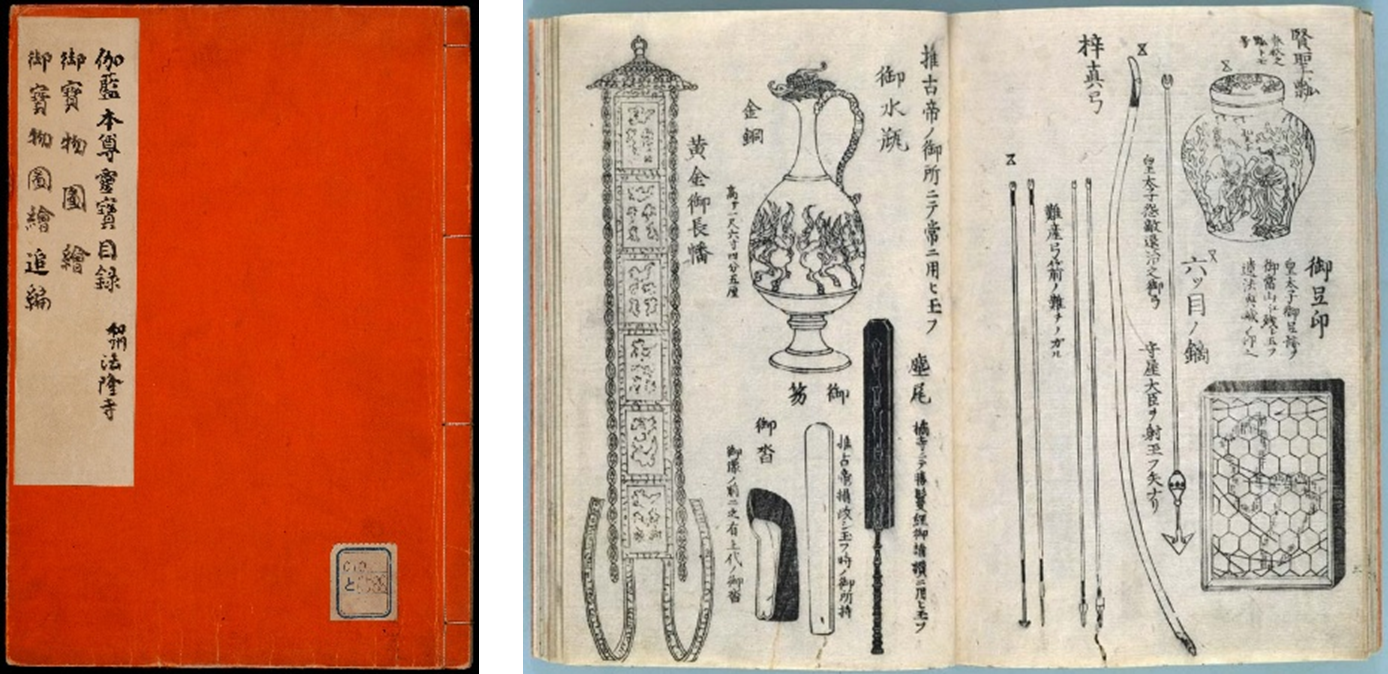
Catalogue of Temple Statues and Sacred Treasures which includes Illustrated Catalogue of Treasures and Supplement to the Illustrated Catalogue of Treasures. Tokyo National Museum.
TNM and the CPCP produced theoretical reconstructions of the gigaku mask Gojo (“Woman of Wu”) and Karura (Skt. garuda) in 2019. A skirt and upper garment were added in 2021 and have been on view since 2023.
The third corner of the Digital Gallery of Horyuji Treasures features one mask and one costume on view for six months at a time. The mask Gojo and the skirt will be on view beginning March 10, 2026.
* The original gigaku masks in the Horyuji Treasures were collectively designated a National Treasure in 2025.
* For conservation purposes, the original gigaku masks are only viewable on Fridays and Saturdays in Room 3 of the Gallery of Horyuji Treasures.
* The original gigaku costumes are not currently scheduled for exhibition.
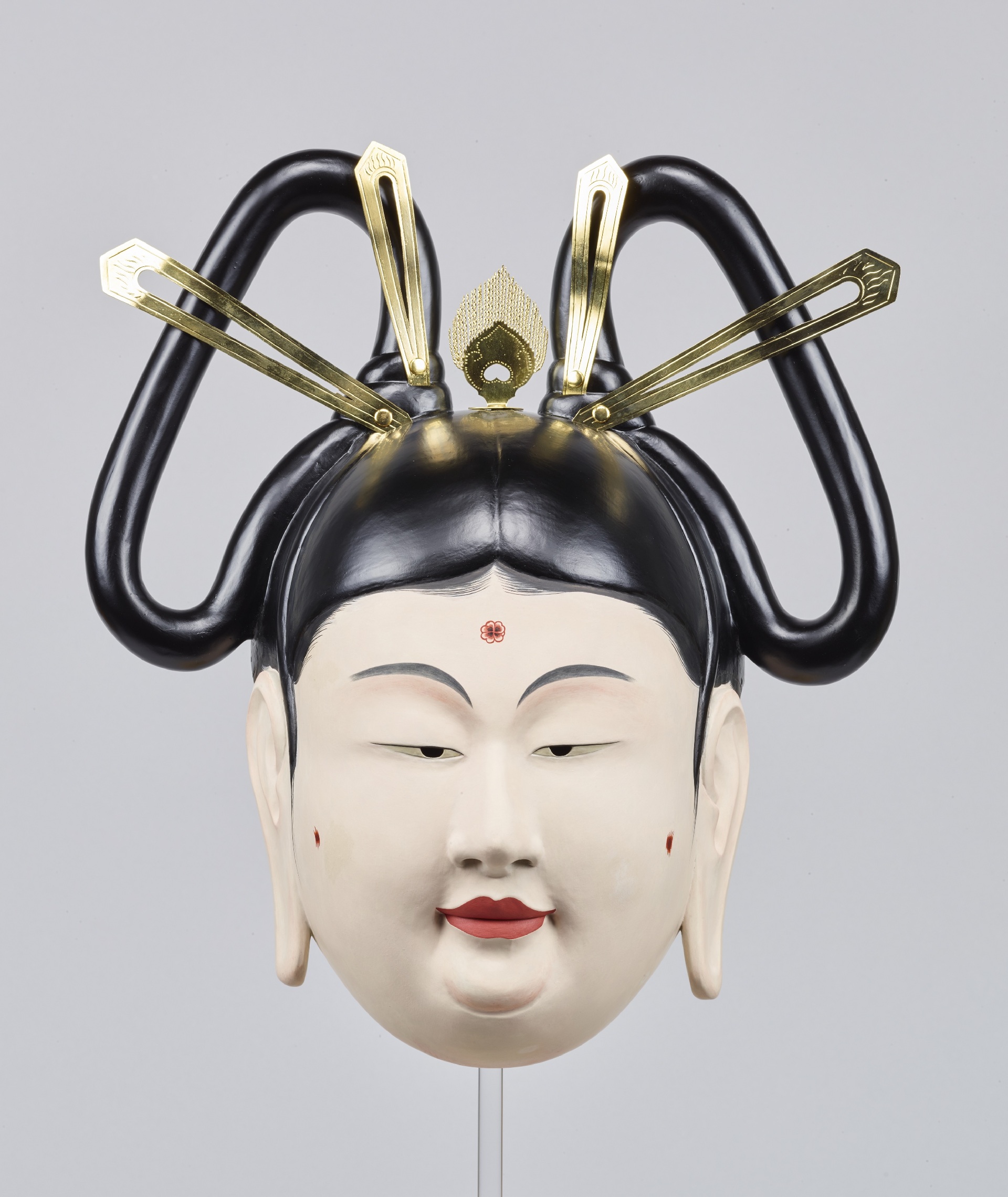
Reproduction of Gigaku Mask: Gojo. 2019. Tokyo National Museum.
(on view from March 10th)
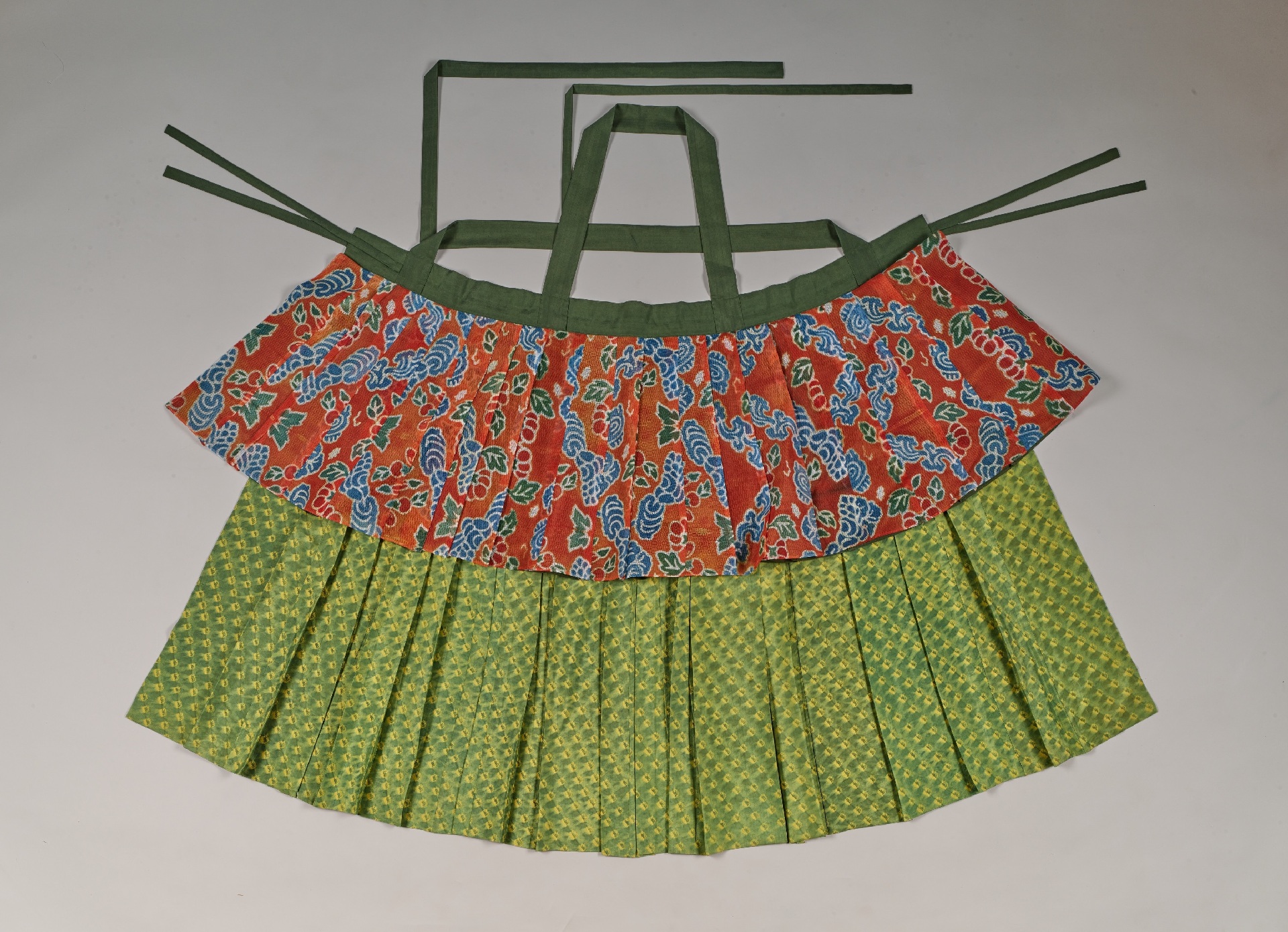
Reproduction of Gigaku Costume (Mo). 2020. Tokyo National Museum.
(on view from March 10th)
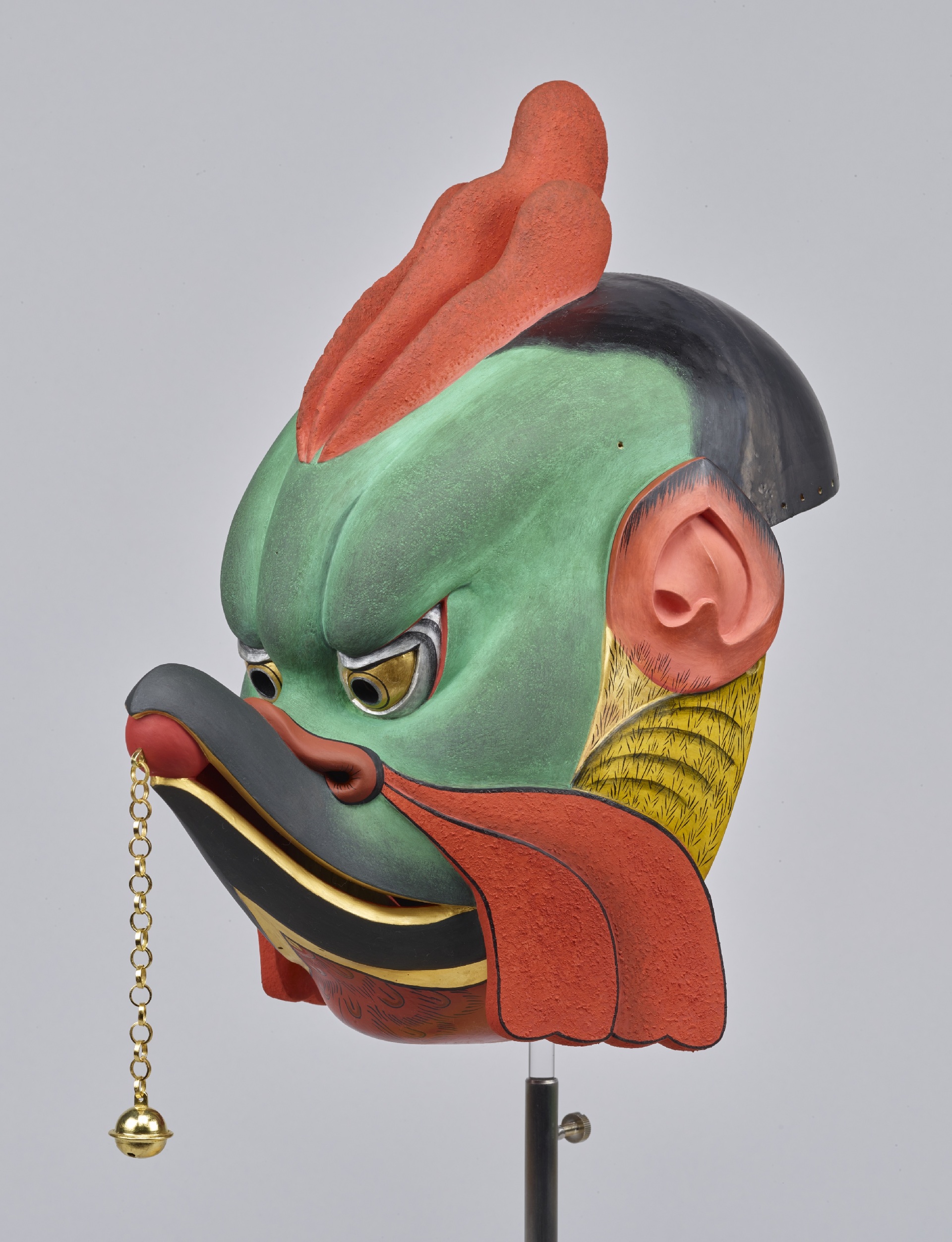
Reproduction of Gigaku Mask: Karura. 2019. Tokyo National Museum.
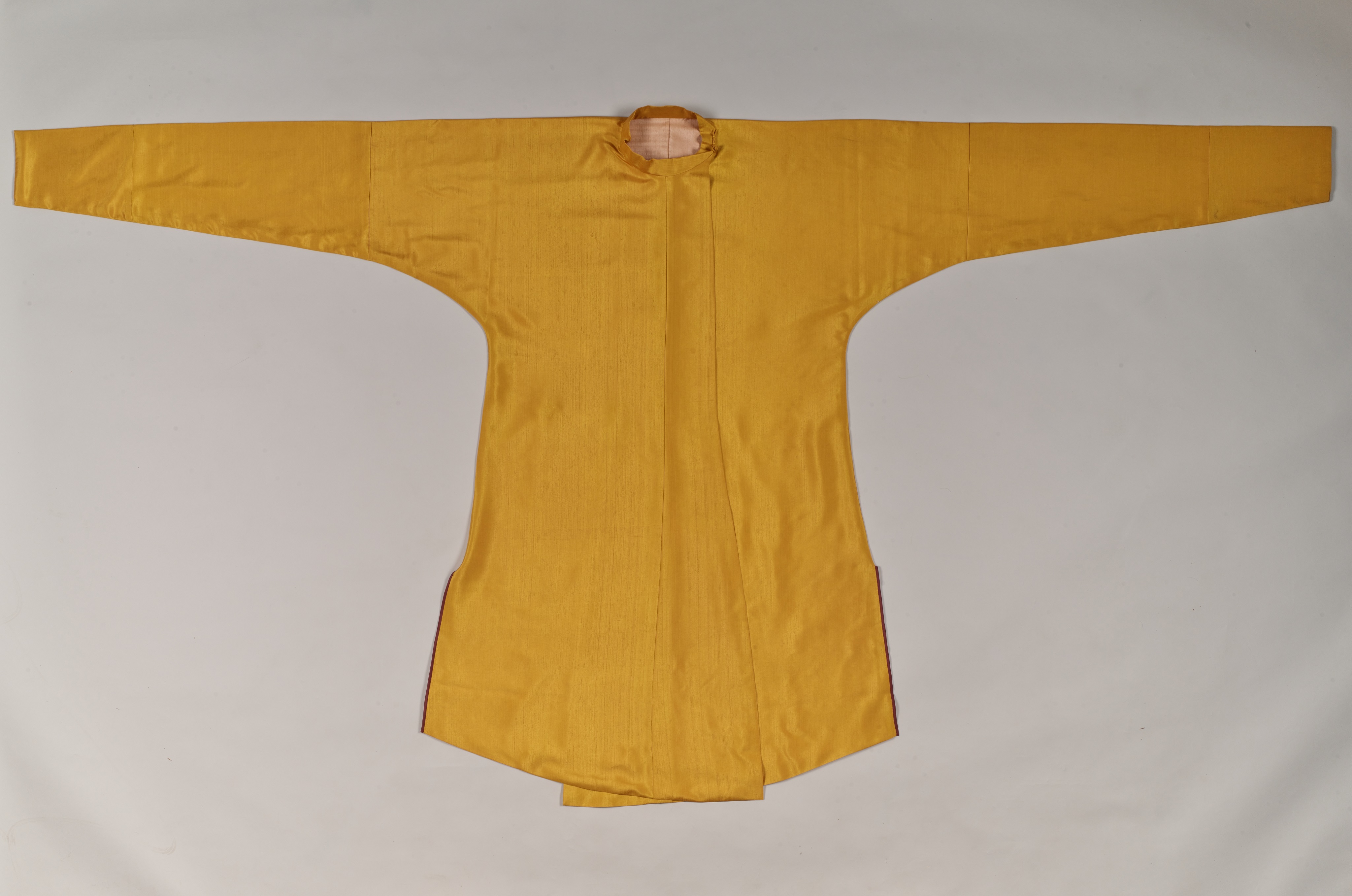
Reproduction of Gigaku Costume (Ho). 2021. Tokyo National Museum.